
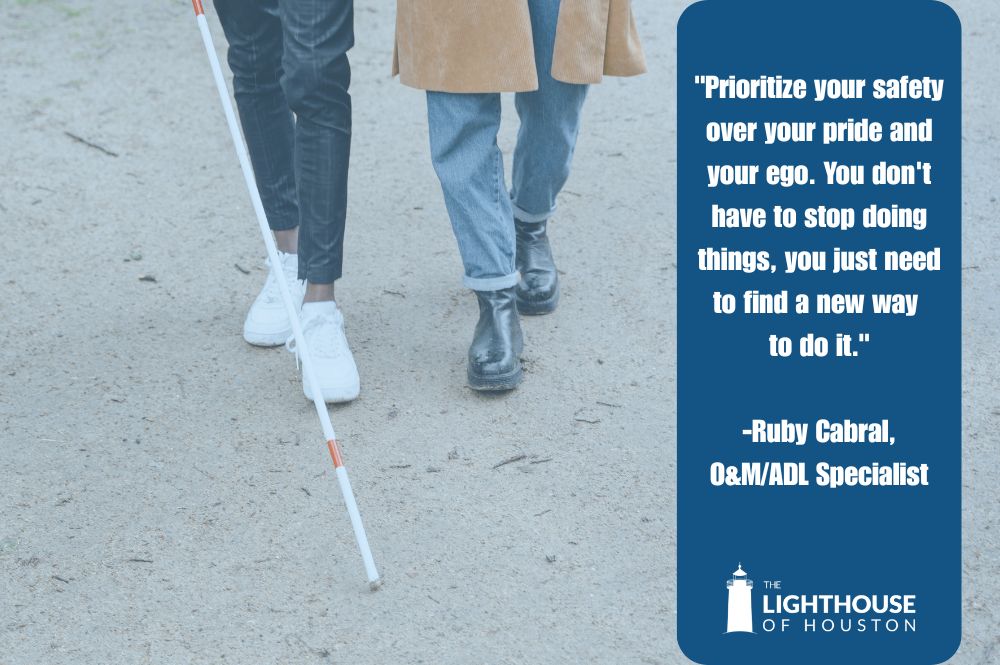
“Prioritize your safety over your pride and your ego. You don’t have to stop doing things, you just need to find a new way to do it.”
Ruby Cabral, The Lighthouse of Houston O&M/ADL Specialist
At The Lighthouse of Houston, we believe that independence is not just a goal—it’s a right. Our comprehensive Orientation & Mobility (O&M) and Activities of Daily Living (ADL) services are designed to equip individuals who are blind or visually impaired with the skills and confidence to navigate the world with greater freedom and self-reliance.
Orientation & Mobility (O&M) Training
Our certified O&M specialist provides personalized instruction to help individuals:
• Learn to use white canes effectively
• Navigate indoor and outdoor environments safely
• Develop spatial and environmental awareness
• Gain confidence using public transportation
• Understand traffic patterns and pedestrian safety
Whether someone is navigating their home, workplace, or public spaces, O&M training is key to fostering independence and confidence.
Activities of Daily Living (ADL) Skills
Our ADL program focuses on building practical life skills that make everyday tasks easier and more accessible, including:
• Cooking and kitchen safety
• Personal grooming and hygiene
• Home organization and maintenance
• Medication management
• Use of assistive technology
These essential skills help our clients lead fulfilling, independent lives on their terms.
Featured Video: Tip by Tip: Navigating the World of White Canes with Ruby Cabral
We’re thrilled to feature our O&M/ADL Specialist, Ruby Cabral, in our latest online workshop! In this empowering session, Ruby shares practical tips, personal insights, and guidance on choosing the white cane that best fits your lifestyle, provides the support you need, and builds your confidence as a blind or low vision individual.
Whether you’re new to the white cane or looking to switch things up, this session is for you. Click here to download Ruby’s PowerPoint presentation from the webinar.
Watch the full video below:
Understanding the White Cane
As Ruby explains in her workshop, the white cane is more than a mobility tool – it’s a symbol of independence and empowerment. Below is some key information about a white cane’s purpose and how to use it effectively. 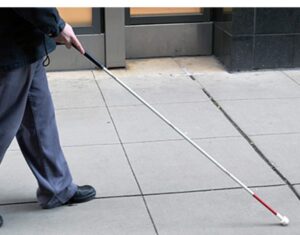
A white cane is a red and white, all white, or all red slender cane with a tip attached. The tip on the cane depends on the terrain the person travels on most.
A white cane can be used as identification to others that you are visually impaired, can be used to locate drop-offs or changes in the terrain, and can be used to explore the environment.
How to Measure a White Cane
The cane is measured in inches. If you are purchasing your cane from ambutech.com, the cane is measured in event increments to the armpit or sternum.
If the cane is coming from the National Federation of the Blind, the cane is measured in off increments to the tip of your nose.
If you’re looking to purchase a white cane or explore different cane tips, The Lighthouse of Houston’s Reflections Store is a great place to start. The store offers a wide selection of over 250 adaptive aids, including mobility canes, cane tips, magnifiers, talking electronics, and more. Whether you’re new to using a cane or looking to upgrade your current setup, the Reflections Store provides both the tools and the guidance to help you find what fits your needs best
White Cane Materials and Tips
There are several different options to choose from when selecting what material a white cane is made out of.
- Fiberglass: The lightest and thickest
- Graphite: The medium, but still light and the thinnest
- Aluminum: The heaviest and has a medium thickness.
The white cane is a vital tool 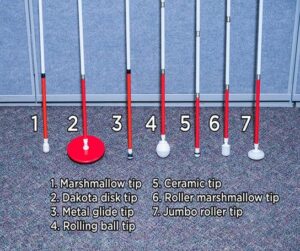 for many blind and visually impaired individuals, and its tip plays a key role in how it interacts with the environment. In the image shown, several popular cane tips are displayed from left to right. The marshmallow tip resembles its namesake and offers a soft, rounded feel. The Dakota disk tip is flat and plate-like, ideal for smoother surfaces. The metal glide tip features a round shape with a flat edge for easy sliding. The rolling ball tip moves side to side, enhancing mobility. The ceramic tip has a half-dome shape with a rubber band for grip. The roller marshmallow tip combines the marshmallow shape with rolling functionality, while the jumbo roller tip is a wide wheel that glides left to right. Fan favorites are pictured, but honorable mentions include the path finder and pencil cane tips, each offering unique benefits for different travel needs.
Why Choose The Lighthouse of Houston?
For more than 85 years, The Lighthouse of Houston has been a trusted source of support and empowerment for individuals who are blind or have low vision. Each year, we serve over 14,000 people through a wide range of programs and services—including health services, assistive technology, vocational training, community support, and internal employment opportunities. Our passionate team is dedicated to creating inclusive, person-centered environments that foster well-being, learning, development, and independence.
At the heart of everything we do is our mission: to educate, empower, and employ people who are blind or visually impaired.
We envision a world where all individuals who are blind or have low vision can live with confidence, independence, and dignity—and we work every day to make that vision a reality.
Whether you’re navigating vision loss for the first time or looking to expand your skills, we’re here to empower you every step of the way.
Get Started Today
Ready to take the next step toward independence? Contact us at (713) 527-9561or info@houstonlighthouse.org or visit our website to learn more and schedule an assessment.
