
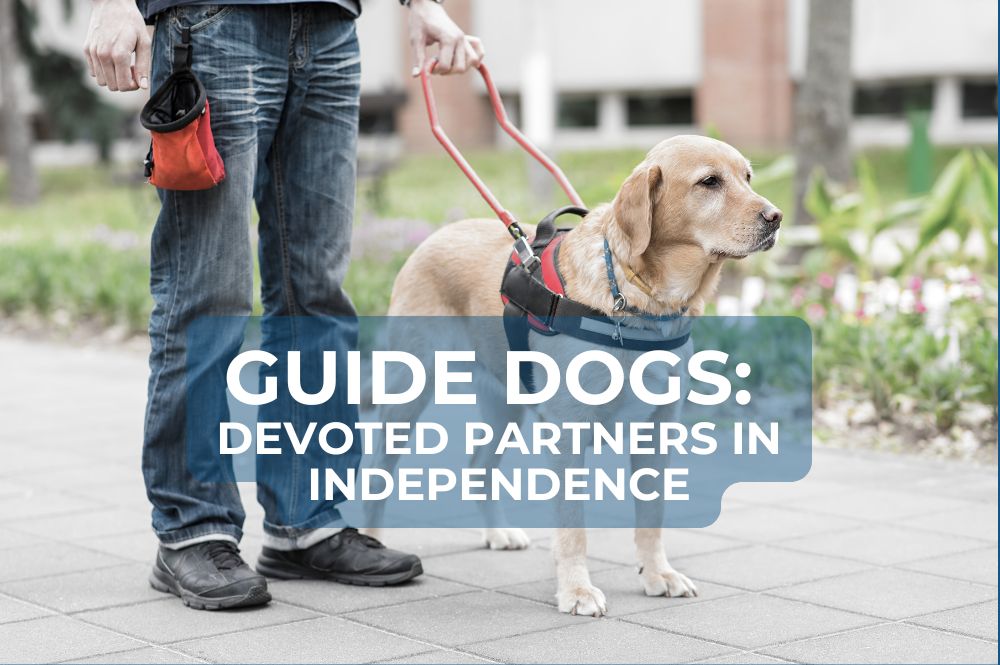
For thousands of people who are blind or have low vision, guide dogs represent far more than faithful companions – they are highly trained partners who provide independence, confidence, and mobility. These remarkable animals undergo extensive training to help their handlers navigate the world safely and independently.
The History of Guide Dogs
The concept of guide dogs dates back to the aftermath of World War I, when Dr. Gerhard Stalling noticed how his German Shepherd interacted with blinded veterans, according to the International Guide Dog Federation.
This observation led to the first formal guide dog training program in Germany in 1916. Today, guide dogs assist people worldwide, with numerous organizations dedicated to breeding, training, and matching these exceptional animals with handlers who need them.
How Guide Dogs Are Trained
Guide dog training begins when puppies are just a few weeks old and involves several stages:
The average time it takes to train a guide dog is roughly 2 years. During this time, they are properly socialized, exposed to different environments, and practice obedience. They will then spend a few months in formal training, learning complex commands including:
Intelligent disobedience (refusing commands that could put their handler in danger)
Navigating obstacles
Finding doors, crosswalks, and other important landmarks
Maintaining a straight line while walking
Stopping at curbs and steps
The Perfect Partnership
Not every dog completes guide dog training – only those showing the right combination of intelligence, focus, and temperament make the cut. Common breeds include Labrador Retrievers, Golden Retrievers, and German Shepherds, chosen for their size, intelligence, and gentle dispositions.
When a dog completes training, they’re carefully matched with a handler based on factors like:
Walking speed and stride length
Physical strength
Lifestyle and daily routine
Living environment
Personal preferences
Life with a Guide Dog
The bond between a guide dog and their handler is profound and mutually beneficial. In these partnerships, the dog helps their handler:
Navigate busy streets and public spaces safely
Use public transportation
Avoid obstacles both on the ground and overhead
Find specific destinations
Build confidence in independent travel
However, it’s important to understand that guide dogs don’t interpret traffic signals or read street signs – the handler must know their route and provide directional commands. The dog’s job is to guide safely along that route while avoiding obstacles.
How to Interact with Guide Dog Teams
When encountering a guide dog team, remember these essential guidelines:
Never distract a working guide dog. This means no petting, feeding, or calling to the dog without the handler’s permission.
Address the handler, not the dog. The team is working together, and interrupting their focus can be dangerous.
Keep your own pets leashed and under control when near a guide dog team.
Don’t grab or steer the person, even if you’re trying to help. Always ask first if assistance is needed.
The Future of Guide Dogs
As technology advances, some wonder if guide dogs will become obsolete. However, the unique combination of intelligence, adaptability, and companionship that guide dogs offer cannot be replicated by electronic aids.
While GPS and other technologies can complement a guide dog’s work, they’re unlikely to replace these extraordinary animals.
Getting a Guide Dog
For those considering a guide dog, the process typically involves:
Consulting with vision rehabilitation professionals
Applying to guide dog training organizations
Completing mobility training
Attending a residential training program with your matched dog
Ongoing support and follow-up care
Most guide dog organizations provide their dogs free of charge to qualified individuals, though waiting lists can be lengthy.
Conclusion
Guide dogs represent an extraordinary combination of animal intelligence, dedicated training, and human-animal partnership. They provide not just practical assistance but also companionship and emotional support to their handlers.
These remarkable animals continue to transform lives, one step at a time, proving that the bond between humans and dogs can create pathways to independence that might otherwise seem impossible.
